
The short answer
Mold remediation in the United States follows ANSI/IICRC S520 — the standard of care for cleaning mold-contaminated materials. It defines condition classes, containment levels, engineering controls and verification criteria. Florida law adds a separation rule: the assessor who writes the protocol cannot be the contractor who executes it.
Standard
ANSI/IICRC S520
Condition 1
Normal fungal ecology
Condition 2
Settled spores
Condition 3
Actual growth
The condition classes
S520 classifies any space into Condition 1 (normal), Condition 2 (settled spores from a Condition 3 source), or Condition 3 (actual indoor growth). The goal of remediation is to return every Condition 2 and 3 area to Condition 1.
This matters because the cleaning approach differs by class. Condition 3 materials are typically removed; Condition 2 areas are HEPA-vacuumed and damp-wiped. Skipping the classification step is the most common cause of failed clearance.
Containment and engineering controls
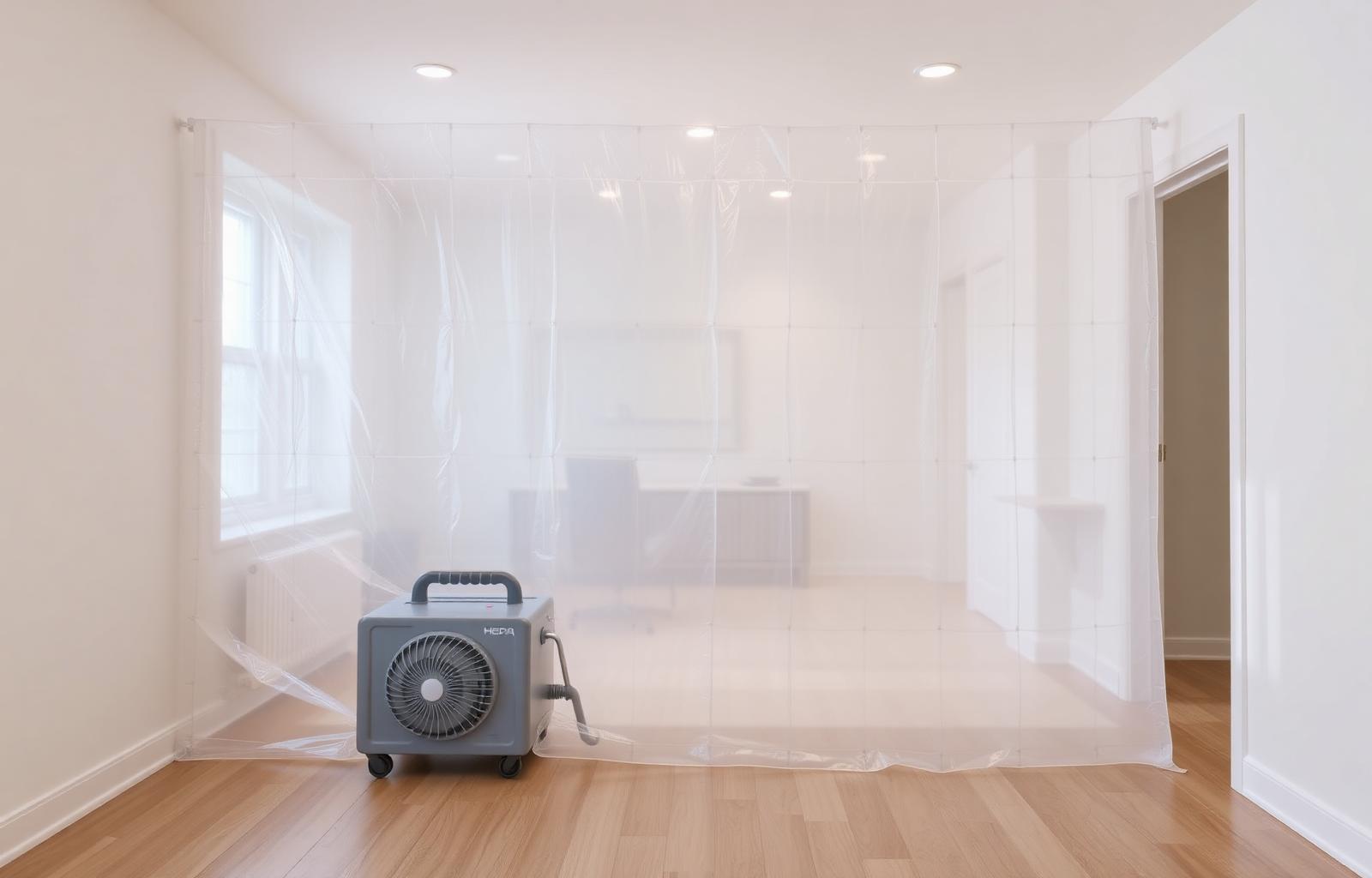
Source containment is non-negotiable. Without it, removing contaminated drywall releases spores into the rest of the building, and the project ends up contaminating spaces that were previously clean.
Standard practice: 6-mil poly walls, zipper-door entry, decontamination chamber, HEPA-filtered negative-air machine sized for at least 4 air changes per hour, and pressure differential maintained throughout the work.
Cleaning methods that work
Porous Condition 3 materials (drywall paper, insulation, carpet) are removed. Semi-porous materials (framing, subfloor) are HEPA-vacuumed, damp-wiped with a detergent, allowed to dry, and re-vacuumed.
Biocides and antimicrobials are not a substitute for physical removal. Spraying a fogger and calling it done leaves dead spores that still trigger occupant symptoms — S520 is explicit on this point.
Post-remediation verification
PRV is the independent third-party check that the work succeeded. It includes a containment-integrity walkthrough before sampling, visual verification of cleanliness, moisture verification of previously wet materials, and (per protocol) air and surface sampling against reference samples.
A pass means the area is ready for reconstruction. A re-clean means specific deficiencies were noted and the area is closed back up until corrected.
FAQs
Frequently asked
- Is S520 the same as the EPA mold remediation guidance?
- Related but not identical. The EPA document is non-binding guidance. ANSI/IICRC S520 is the consensus standard of care used by remediators, insurers and courts in the US. Most defensible protocols reference both.
- Why does Florida require assessor/remediator separation?
- To remove the conflict of interest where the same firm writes the scope of its own work. The assessor inspects, scopes and verifies; a different licensed remediator executes. The split is statutory.
- What if my carrier denies the PRV cost?
- Cite Florida statute and your written protocol. Most carriers cover PRV when the protocol calls for it, because they understand the unverified-remediation liability that comes with skipping it.
Related services
Ready to book the service?
Go deeper