
The short answer
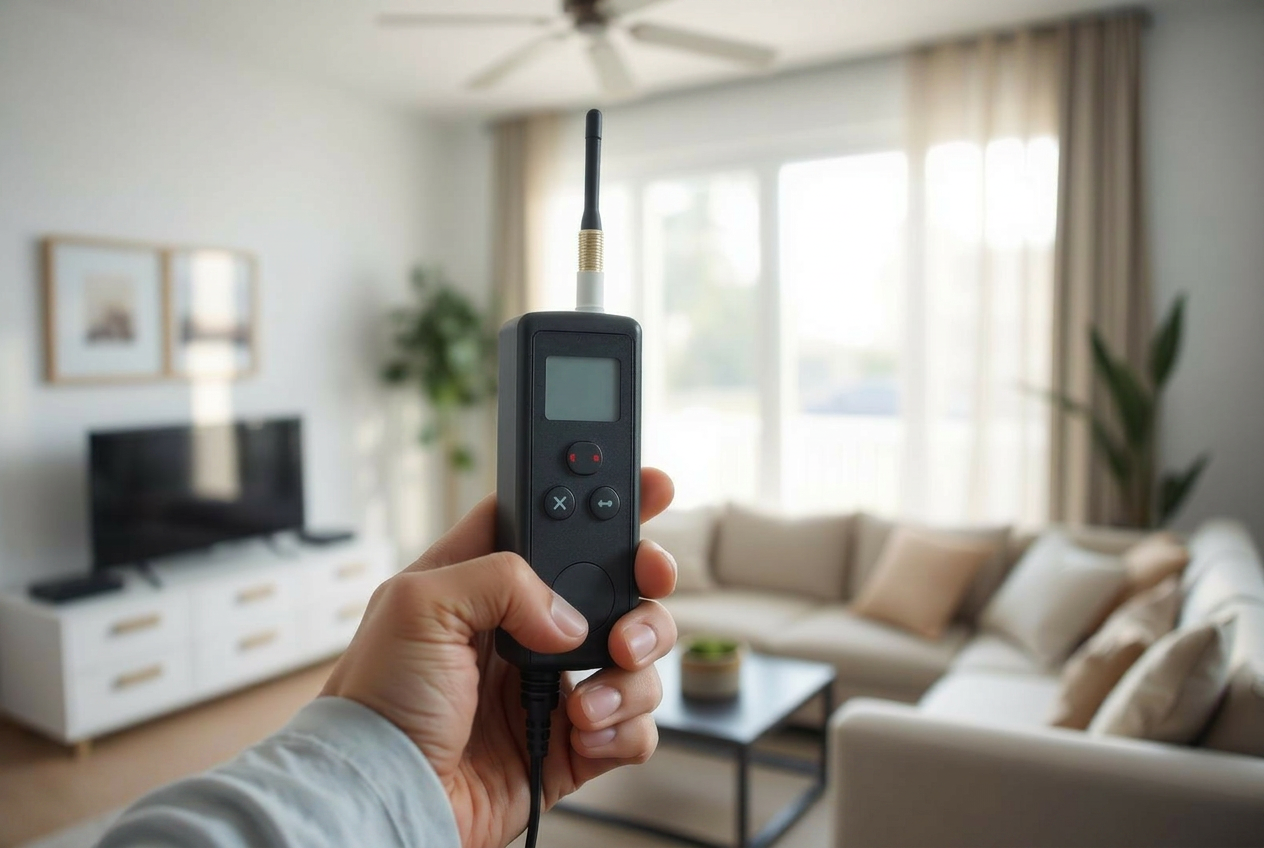
A real indoor air quality test measures eight core parameters: indoor temperature, relative humidity, fine particulate (PM2.5), carbon dioxide (CO₂), carbon monoxide (CO), combustible gas, formaldehyde, and total volatile organic compounds (TVOCs). Together they describe how the building is performing and whether occupants are being exposed to something they should not be.
Comfort baseline
Temperature & RH
Ventilation proxy
CO₂
Combustion safety
CO
Off-gassing
TVOC & HCHO
Why these eight, not lab tests for everything
Indoor air quality is not one thing. It is the overlap of comfort, ventilation, combustion safety, particulates and chemistry. The eight parameters below cover that overlap — they tell you whether the building is performing, and they point at the next sample to take.
We start every IAQ visit with continuous instrumentation, not lab sampling. Lab work is expensive and only useful when it can answer a specific question. Instrumentation tells us which question to ask.
Comfort: indoor temperature and relative humidity
Florida buildings live or die by humidity. Above 60% relative humidity for sustained periods, dust mites multiply, mold germinates on cool surfaces, and condensation forms inside wall cavities. Below 30%, occupants report dry eyes, dry throat and static.
Targets we use: 68–76°F indoor temperature and 40–55% RH. When a building cannot hold those numbers, something about the HVAC system, the envelope or the load is wrong, and chasing IAQ symptoms before fixing it is wasted money.
Ventilation: CO₂ as a proxy for fresh air
Outdoor CO₂ runs about 420 ppm. Indoor readings climb as people exhale; when ventilation is adequate, the system dilutes that load back down.
Readings under 800 ppm indicate good ventilation. 800–1,000 ppm is acceptable. Above 1,000 ppm in occupied spaces correlates with reduced cognitive performance and complaints of stuffiness; above 1,400 ppm we start to see drowsiness and headache reports.
Combustion: CO and combustible gas
Carbon monoxide is invisible, odorless, and lethal. We screen every building with combustion appliances (gas water heaters, gas ranges, fireplaces, attached garages). Anything other than 0 ppm in living space triggers escalation.
Combustible-gas screening catches natural-gas and propane leaks at the appliance, the regulator, or the line — sometimes years after the leak began.
Particulates: PM2.5
Fine particulate (≤2.5 microns) passes deep into the lung and into the bloodstream. Indoor sources include cooking, candles, fireplaces, smoking, vacuuming without HEPA, and infiltration from outdoor smoke or traffic.
Spikes during cooking are normal and dissipate. Persistent baseline elevations point at filtration, return-air leaks pulling attic dust, or outdoor infiltration.
Chemistry: formaldehyde and TVOCs
Formaldehyde off-gases from engineered wood, urea-formaldehyde foam, some insulation, certain fabrics, and many adhesives. New construction and recent renovations often run hot for 6–18 months.
Total VOCs is a summed measure of everything from cleaning products to building materials to personal care products. Elevated TVOCs without an obvious source usually points at materials, finishes or a stored chemical.
Instrumentation
What we measure in every room
Indoor air quality is never one number. Our on-site assessment captures a complete profile of the air people are actually breathing — paired with the building science behind it.
Indoor Temperature
Comfort and HVAC performance baseline measured room-by-room.
Relative Humidity
The single biggest driver of mold, dust mites and condensation in Florida.
Airborne Particulate Matter
PM2.5 / PM10 readings indicate filtration, infiltration and combustion sources.
Carbon Dioxide (CO₂)
A direct proxy for ventilation adequacy and occupant load.
Carbon Monoxide (CO)
A life-safety screen for combustion appliances, garages and attached spaces.
Combustible Gas
Screening for natural gas, propane and other combustible leaks.
Formaldehyde (HCHO)
Off-gassing from cabinetry, flooring, foam insulation and new furnishings.
Volatile Organic Compounds
TVOC screening for paints, adhesives, solvents and product emissions.
FAQs
Frequently asked
- Do you need to test for mold spores too?
- Sometimes. Spore counts are useful when there is visible growth, a known water event, or a defensible record requirement. We do not blanket-test air for mold on every IAQ visit — most of the time the eight core parameters tell us whether mold sampling is warranted.
- Can I just use a consumer IAQ monitor?
- Consumer monitors are a great way to spot trends in your own home — CO₂ rising in the bedroom overnight, PM2.5 spikes when cooking. They are not calibrated to the standard required for a defensible report, but they are useful between professional visits.
- How long should the measurement run?
- Snapshot readings catch only the moment you took them. We deploy data loggers for at least 24 hours, ideally 72, so we see overnight RH, occupied vs unoccupied CO₂, and any cycling caused by the HVAC.
Related services