
The short answer
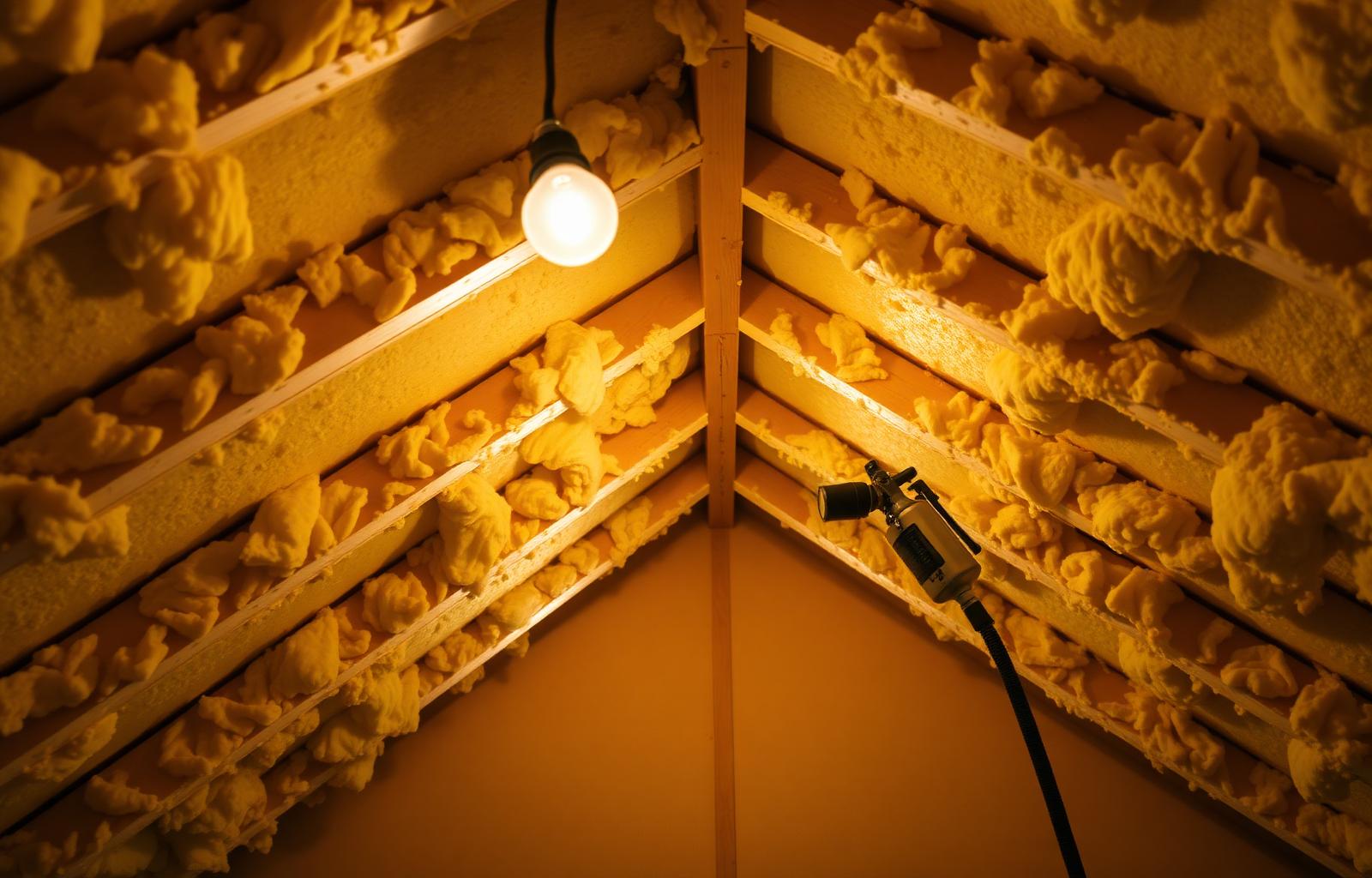
When spray polyurethane foam fails in a Florida home, it is almost always one of four causes: off-ratio mix at the gun, lifts applied too thick, an unvented attic that traps the off-gassing, or a pre-existing IAQ problem misattributed to the foam. Each has a different remedy.
Cause 1
Off-ratio mix
Cause 2
Lifts too thick
Cause 3
No ventilation
Cause 4
Pre-existing IAQ
Off-ratio mix
Spray foam is a two-component product (A-side isocyanate, B-side polyol resin). If the gun mixes them outside spec — usually because of cold drums, a clogged hose, or a tired pump — the reaction does not finish. The foam keeps off-gassing amines for weeks, sometimes years.
Symptom: a fishy or ammonia odor that intensifies on warm days. Test: lab analysis for the amines associated with incomplete polyurethane reaction.
Lifts applied too thick
Open-cell foam is supposed to be applied in 4–6 inch passes. Closed-cell is supposed to be applied in 2-inch passes. Beyond those limits, the core of the lift hits temperatures that scorch the chemistry, and you get off-gassing from a thermal failure.
Symptom: discoloration in the foam core when you cut it open. Remedy: removal of affected material and re-application at correct thickness.
Unvented attic, no makeup ventilation
Encapsulated attics need a small amount of mechanical ventilation — typically a continuously operating exhaust pulling 30–50 CFM, or a dedicated dehumidifier. Without it, the attic becomes a pressure-driven reservoir of any off-gassing that occurs.
Remedy is often the cheapest of all four: add ventilation, monitor, re-test.
Pre-existing IAQ problem
Many SPF complaints turn out to be unrelated to the foam. New cabinetry, new carpet, a stored chemical, a moldy crawl space — all can produce the same complaint, and the foam is a convenient target because it is recent and expensive.
Proper assessment isolates which source is actually responsible before anyone tears out a $20,000 attic.
FAQs
Frequently asked
- Is all spray foam off-gassing dangerous?
- Properly cured spray foam is inert. The off-gassing of concern comes from failed chemistry — off-ratio mix or thermal failure — not from properly installed foam.
- Can foam be removed?
- Yes, but it is invasive and expensive. A real assessment first establishes whether ventilation, encapsulation or partial removal would resolve the complaint before recommending full tear-out.
- Will the installer fix it?
- Reputable installers usually try. Independent documentation of the failure mode, with lab data, dramatically increases the chance the warranty claim is honored.
Related services
Ready to book the service?
Go deeper